Field Agents


Field Agents , 2026

A conversation between Christina Kruse and Tamar Dresdner

Tamar Dresdner: We met in 2017 through a mutual friend and we have been close friendssince. During this time, we had many conversations about life, family, love, politics and of course about your practice and process. Finally, this journey led us to working together on your exhibition and it's very exciting and meaningful for me on many levels, so thank you for inviting me to curate this show and thanks to Benjamin for making this collaboration possible.

Tamar Dresdner: Similar to the way an artist acts on material, external things affect our inner selves. In this exhibition, you are concerned with how global turbulence causes moral frameworks and values to shift within us, and how a person can maintain balance, as a human being, in an environment that is constantly and rapidly changing. I am having this conversation with you from Tel Aviv while the Middle East is burning. Some of the questions and thoughts that your exhibition deals with are an internal conversation that I have with myself on a daily basis and I think that today they are relevant more than ever. When boundaries between good and bad, truth and falsehood are blurring, in the end, it always comes down to negotiation, isn't it?

Christina Kruse: I think right now there is a great deal of conflict when it comes to morals and values. I feel that the entire system, as I have known it, is shifting. Qualities that were once considered important or universally valuable like simple human decency, now seem to be up for negotiation, which creates a sense of imbalance on many levels. I constantly feel the need to internally negotiate the instabilities in the world to try to stay somewhat level headed. This body of work explores different stages of negotiation within oneself, and how those internal processes might translate into form.

TD: How are these thoughts and ideas expressed in the work you made for this exhibition? Does your work's conceptual framework influence your choice of materials?

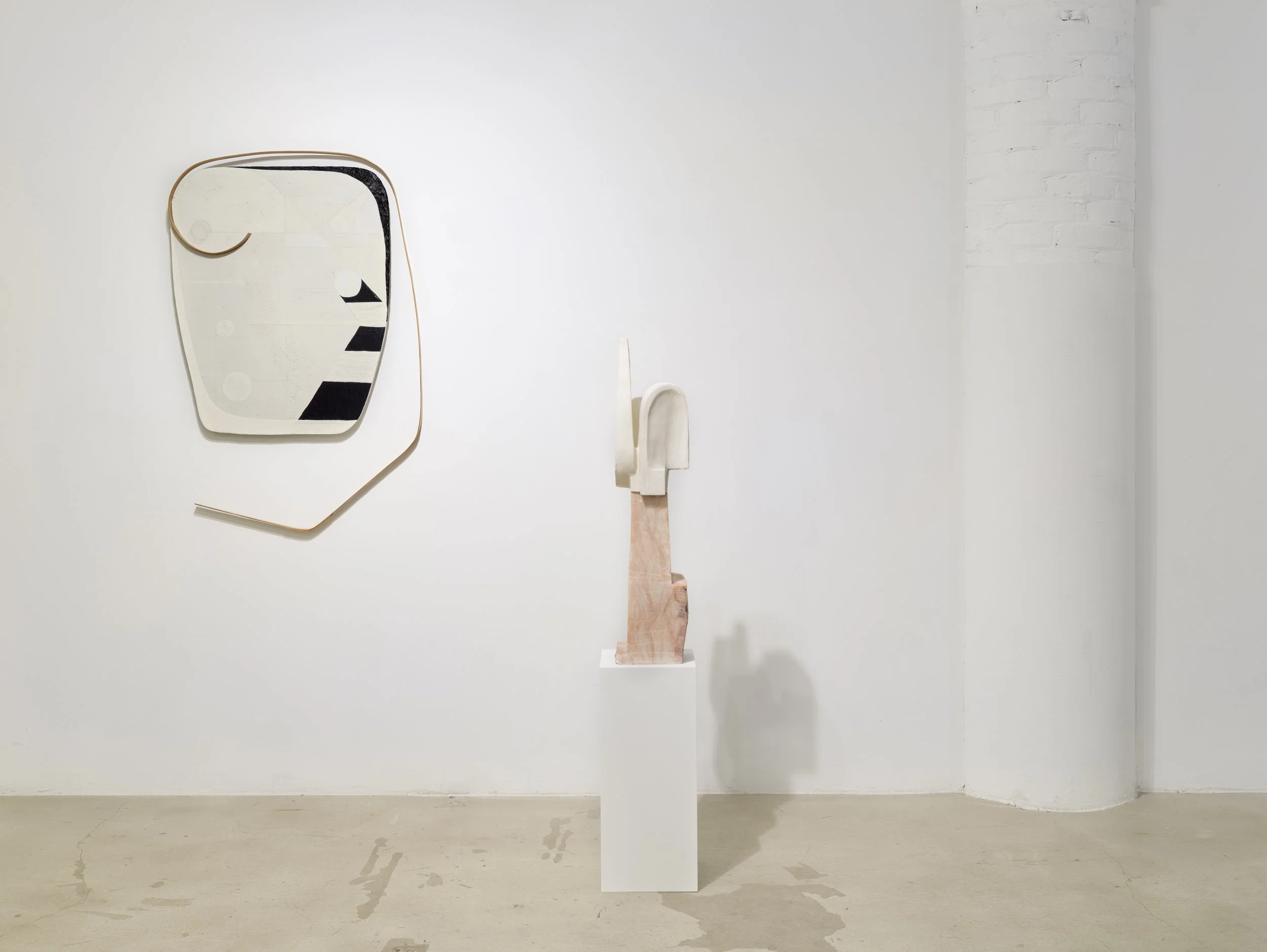
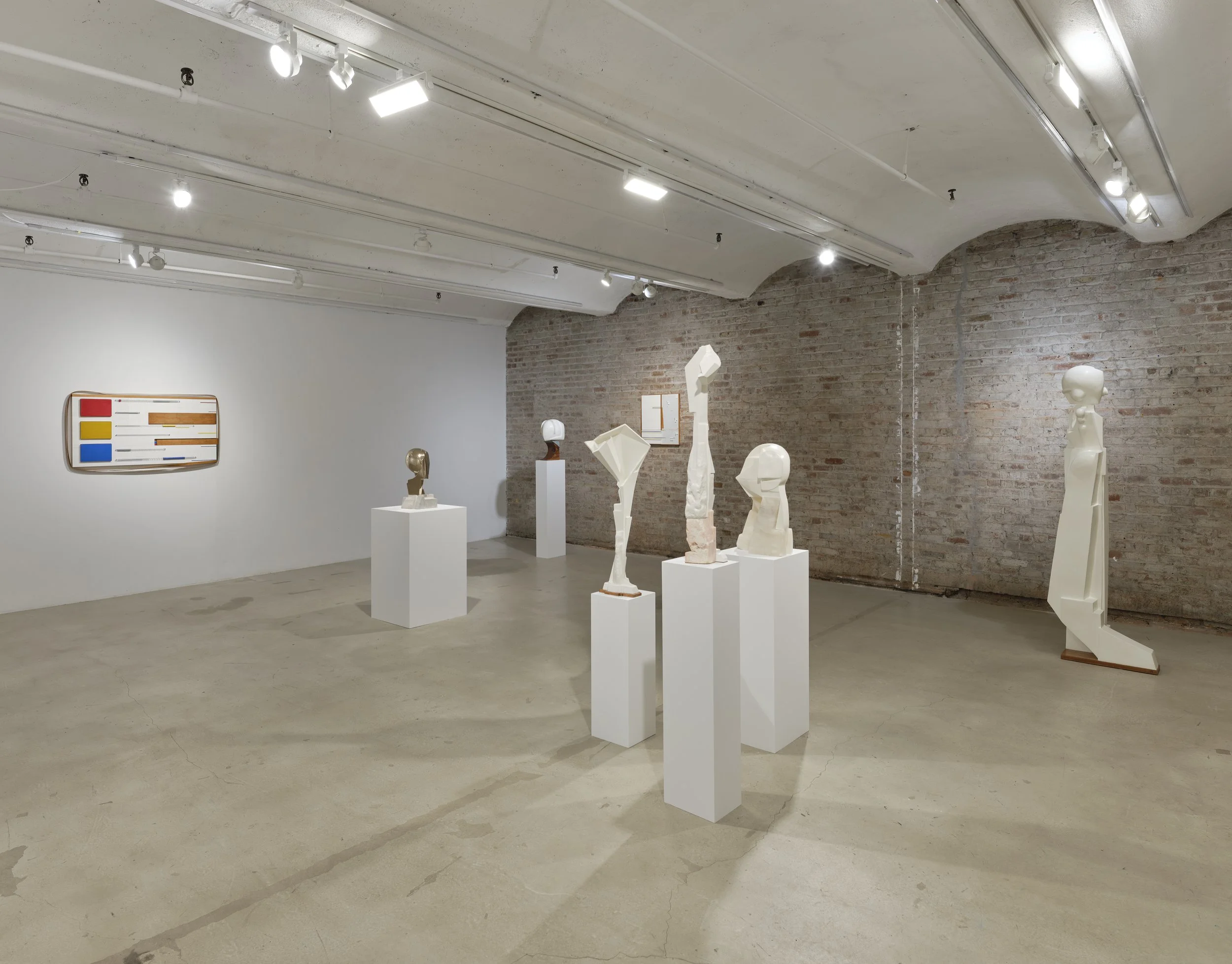
CK: This body of work explores different stages of negotiation within oneself, and how those internal processes might translate into form. Since the work is about negotiation, I decided to use the grid for most of the wall work and the body as a reference for the sculptures. Both function as universal frameworks. The grid provides a base onto which elements can be placed, where they immediately begin to establish visual relationships. From that point on, I can build a communication, a negotiation, or even an entire system of relationships. Conceptually, this structure worked well for the exhibition. While the framework itself does not dictate the choice of materials, the underlying questions do. Because these questions are largely concerned with the human condition, I feel that natural materials, whenever possible, are the most appropriate.

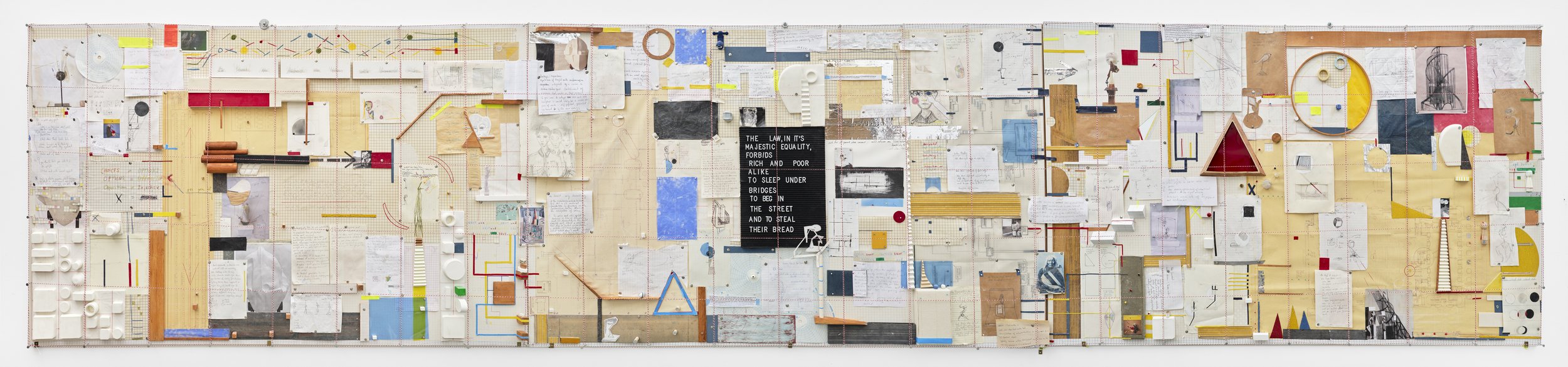
TD: In one of our conversations, you talked about pressure points in your sculptures. This got me thinking about Chinese medicine, which talks about applying pressure to certain points in the body to release the energy that is blocked there. The flow of energy in the space is central to any art exhibition and when it comes to three-dimensional work it's even more evident - the way the environment affects or activates the sculptures, but also how the sculptures affect the space they inhabit and the air around them. After all space is neither a substance nor a void and exists only in relation to what it allows.CK: Yes, those pressure points were much more visible in an earlier stage of the sculptures. At that point they functioned almost as common denominator's sites where tensions within the work became concentrated. But ultimately it didn’t work, the sculptures began to feel too mechanical, too rigid, and too critical of themselves. In a sense, I was reproducing the instability of reality rather than finding the point of counterbalance within it. Where that approach worked though was in the 18 feet long collage, which I titled Bruchlinien / Fault Lines.

TD: Unlike a storyboard this long collage has no sequential order. It does not begin and end at certain points and one can wander freely along it, getting lost in its winding paths and then each time finding another landmark that directs you to a new route. There is a sense of playfulness to this journey, a sort of secret or riddle to be unraveled, with clues scattered along the way that may, or may not, help solve the mystery. But is it really solved or will the ends always remain untied?

CK: The collage wall developed gradually over more than two years. It began with a single note, then another, then fragments of material, images, and photographs. I added things freely as they occurred to me, and over time it became a collection of thoughts, a way of keeping track of my thinking and observing what these elements might do together in material form. It functioned as an ongoing conversation with myself. Whenever I felt stuck with the sculptures, I would return to a particular area of the collage and work on it further, clarifying, elaborating, or shifting something within that section. The collage doesn’t resolve or answer anything. It is full of contradictions, right and wrong. Yet it remains balanced because there is an open communication between all its elements. When two friends, one of whom was you, visited the studio and asked whether the work could be exhibited, it hadn’t even occurred to me to think of it that way. I had always considered it my own drawing board. But in the end, it felt right to include it because it is essentially where everything begins.

TD: I find that at the center of your practice there is a negotiation between structure and flexibility, control and spontaneity, thought and expression. Would it be true to say that in the beginning of the process you had a general idea of what you wanted to research and how you wanted to translate it visually, but at the same time you also let go and enabled yourself to embark on a journey with a road map to nowhere? I'm also curious to know if you feel that this process taught you to trust your instincts, which are your inner compass, knowing that they would safely guide you to where you needed to be.

CK: In my research I did find something I had been looking for in a few philosophy books and I remember that moment very clearly. Michel Foucault describes situations of inner change or challenge in very physical terms, and reading that made me feel that I was on the right track. Of course there were plenty of dead-end roads along the way, but that is part of the process. Elimination is as important. Did it teach me to trust myself? I think I trust myself in the sense that when I realize I am going down a rabbit hole, I will stop and start again.

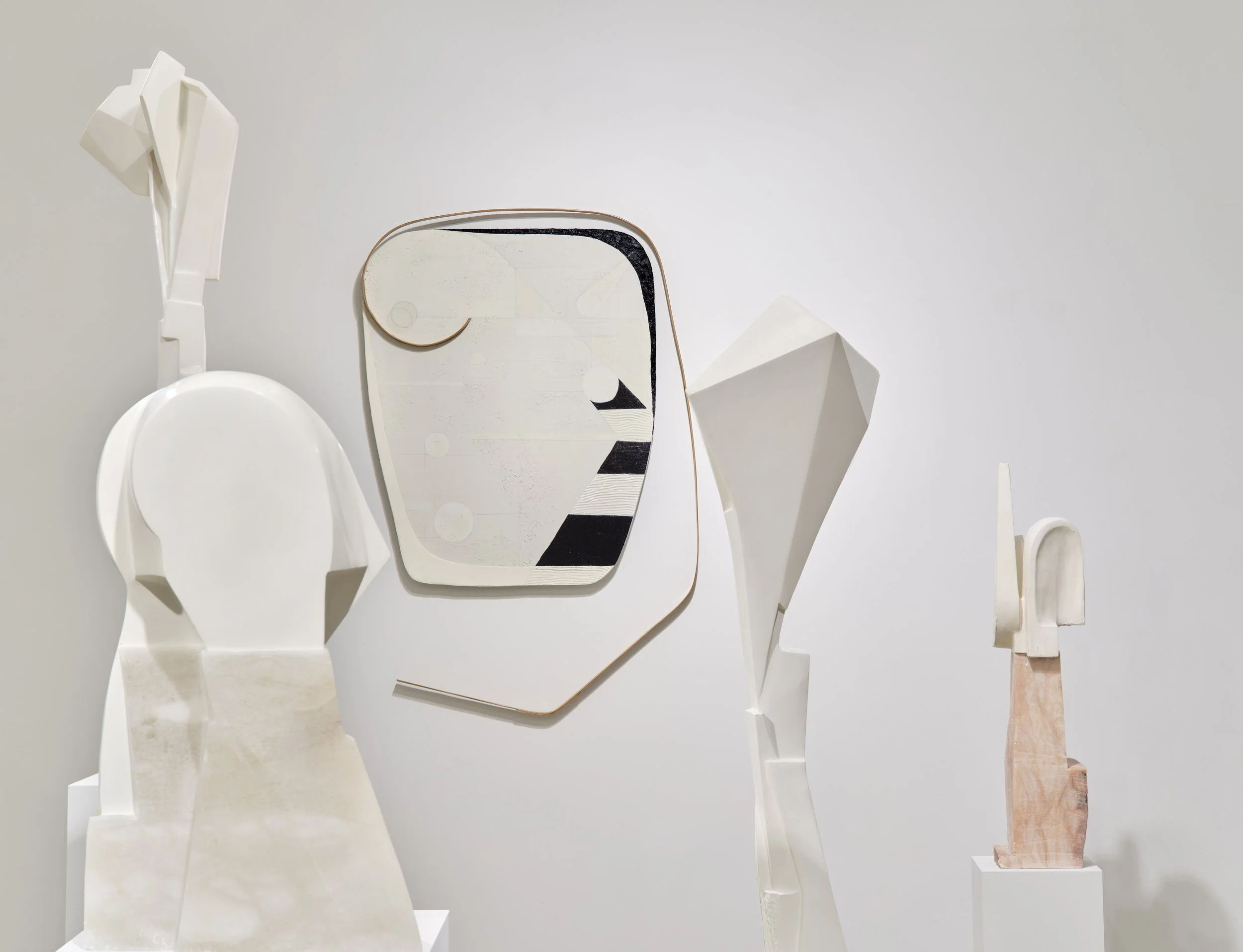
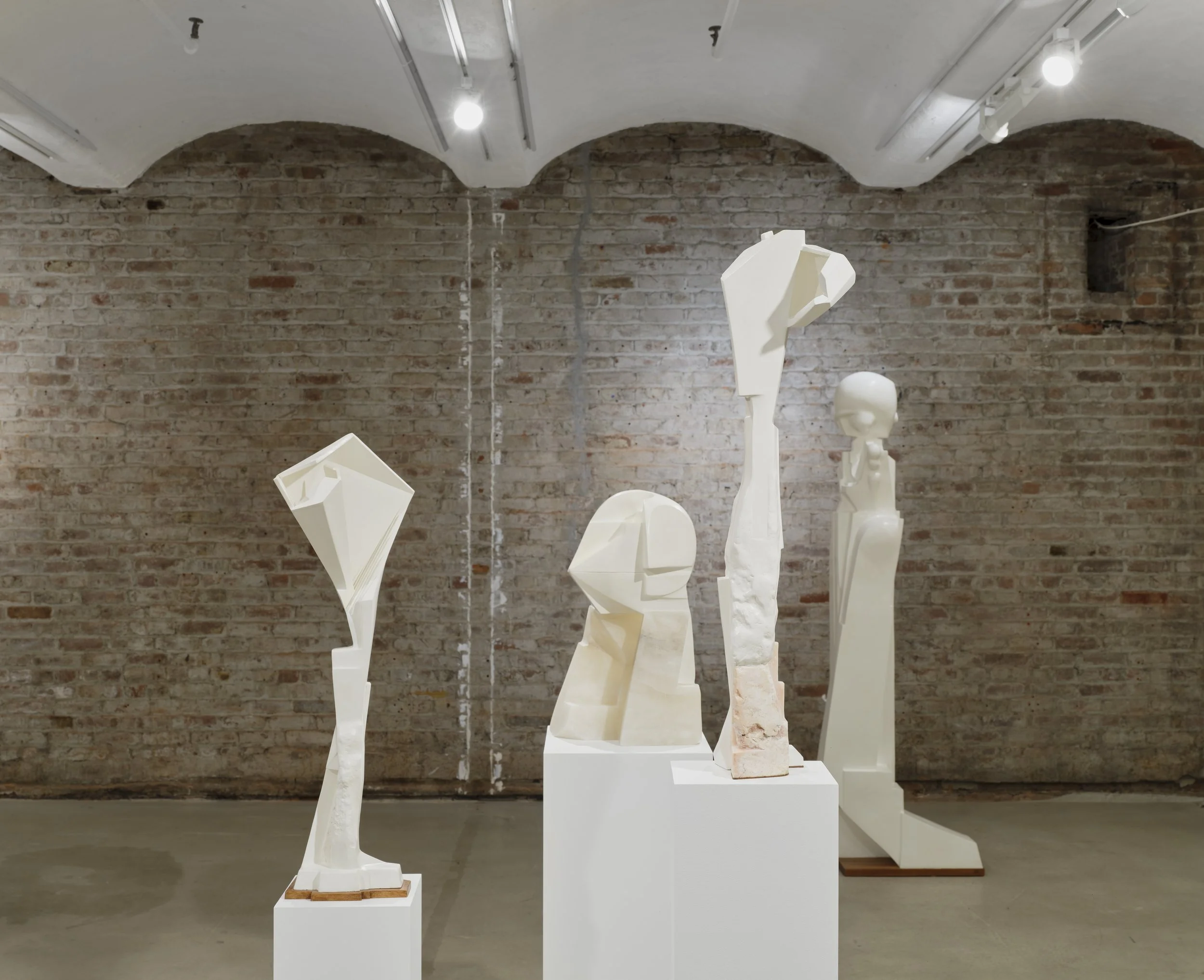
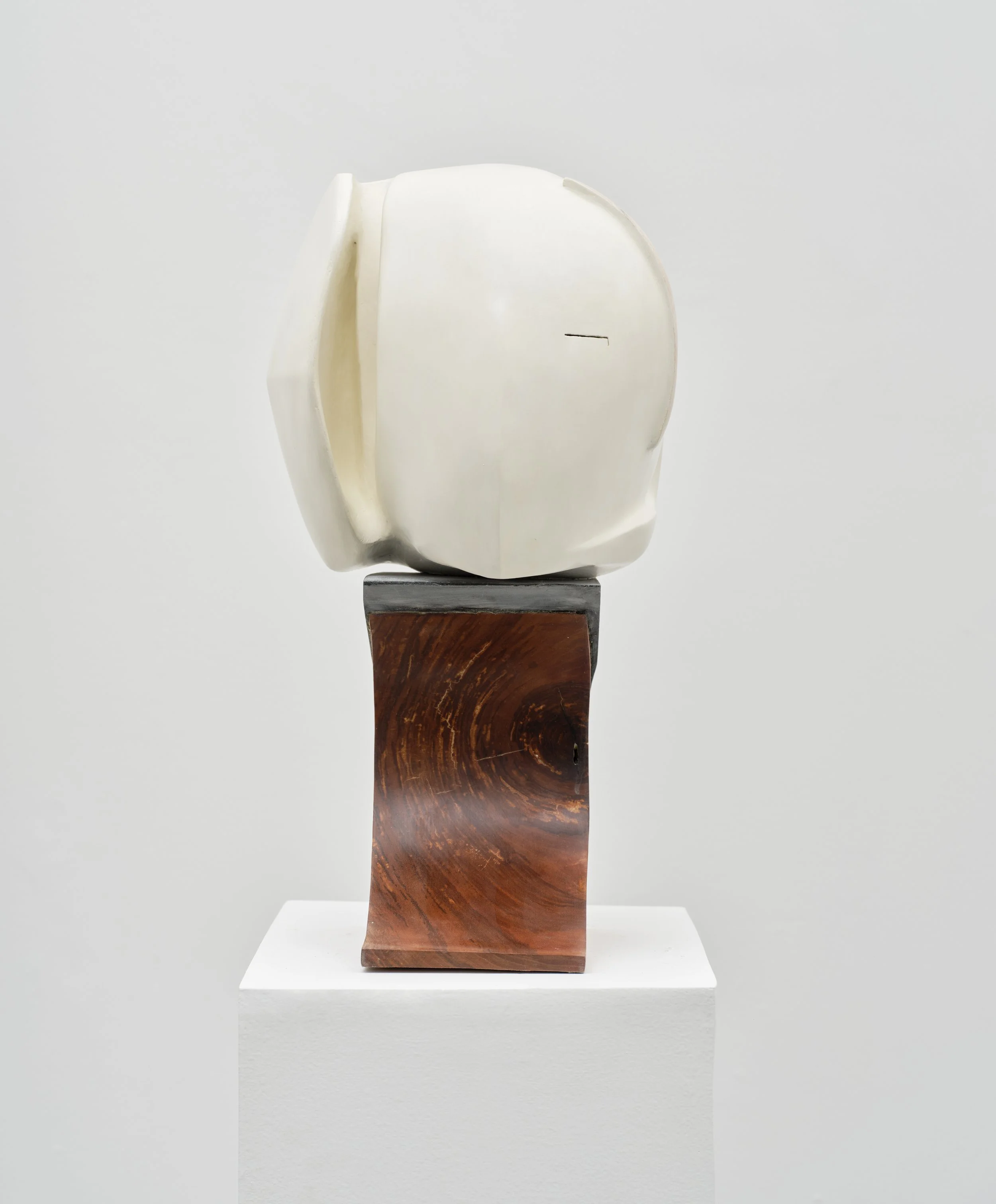
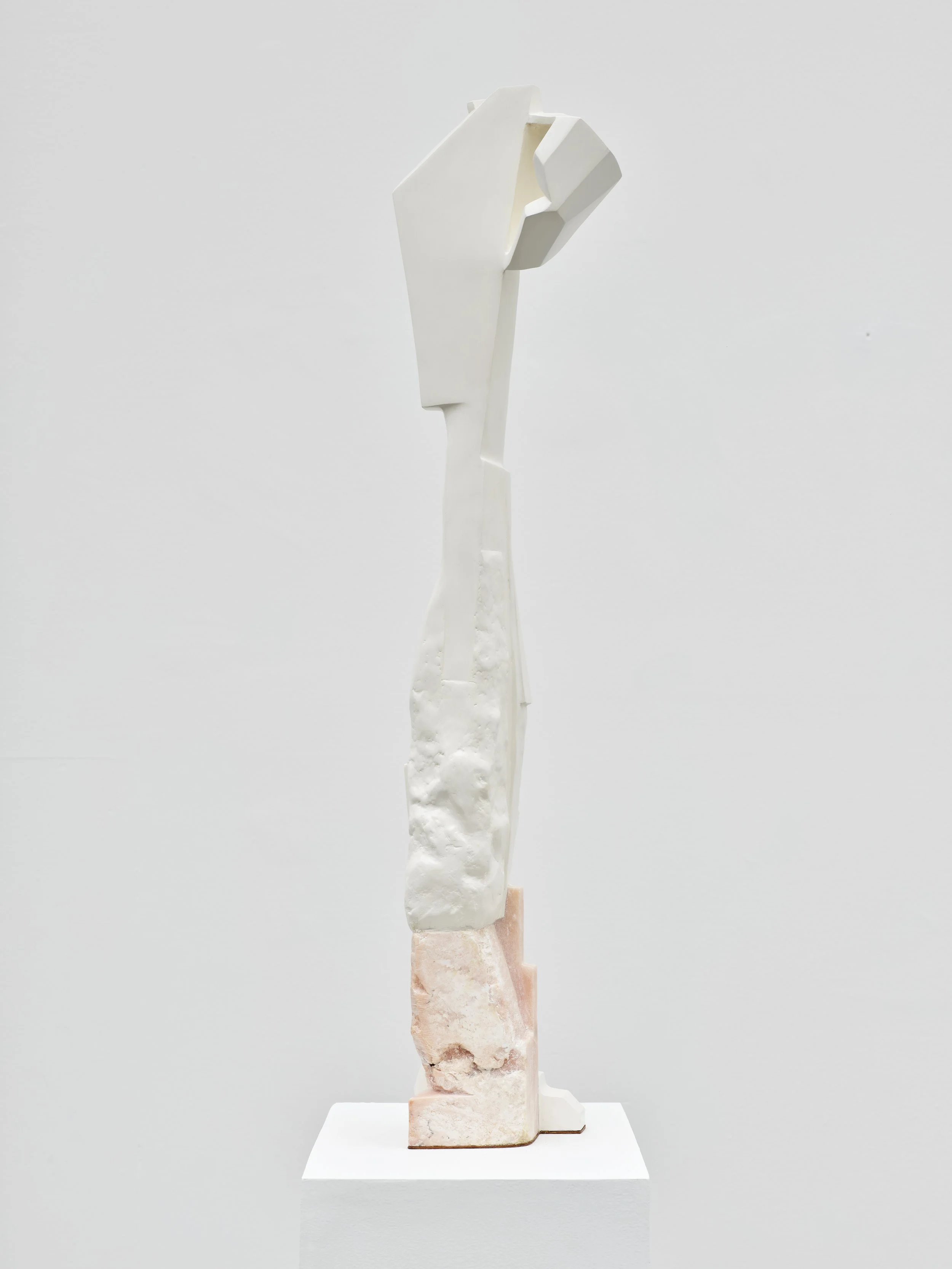
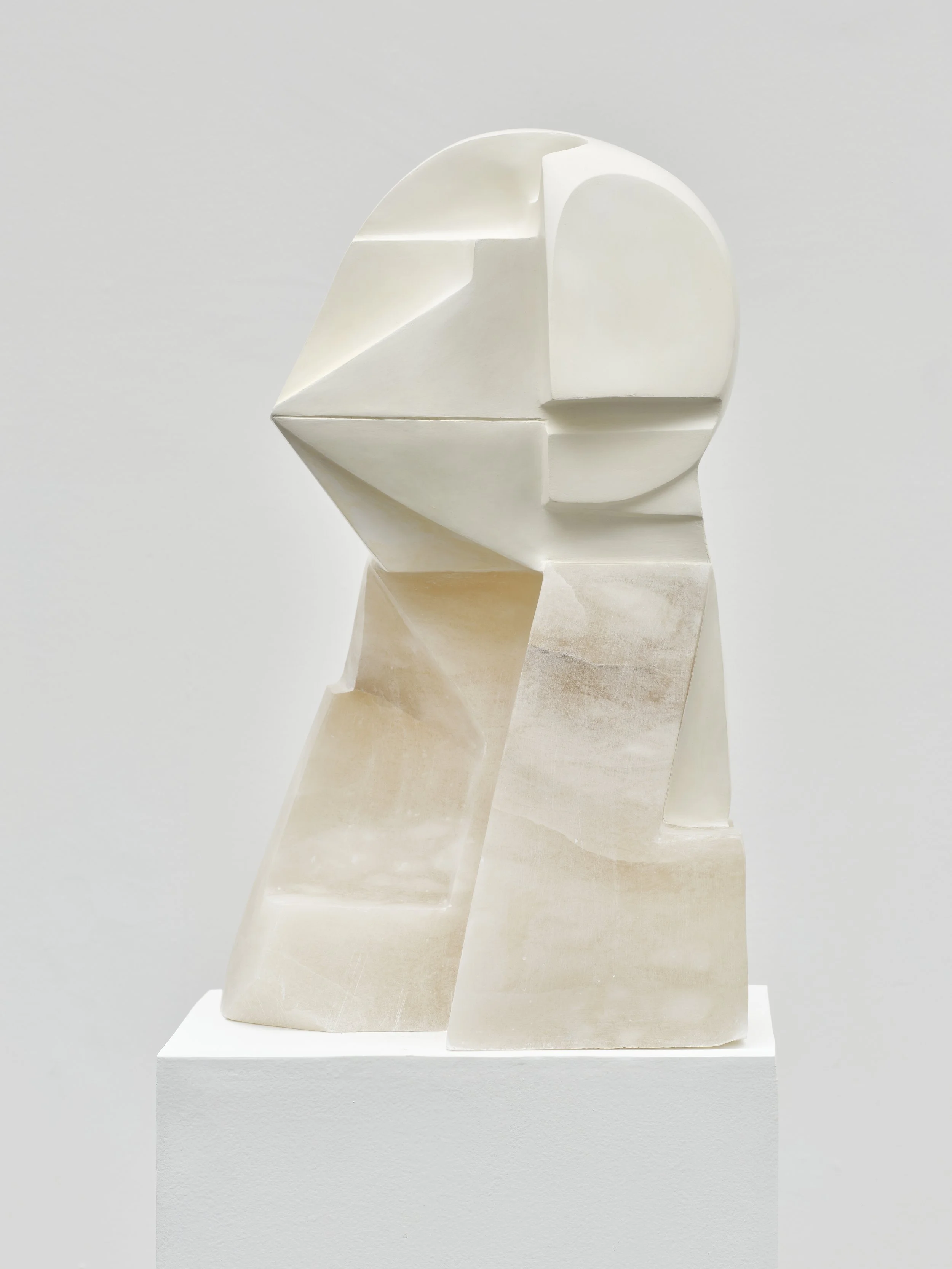
TD: When we first met in early 2017 you were making small "heads". Since then, they evolved into totem like sculptures, the head gaining a "body", stretching upwards and downwards. When I think about movement in these sculptures, it feels internal rather than external, as if it takes place within the form itself rather than spreading out into the surrounding space.CK: Yes, I have moved on from the heads and have arrived at full forms. For me, form is the internal organization of content or meaning. The two are inseparable, they are almost a single unit, or two interrelated categories. Meaning carries the dynamic energy of the work, while form stabilizes it.

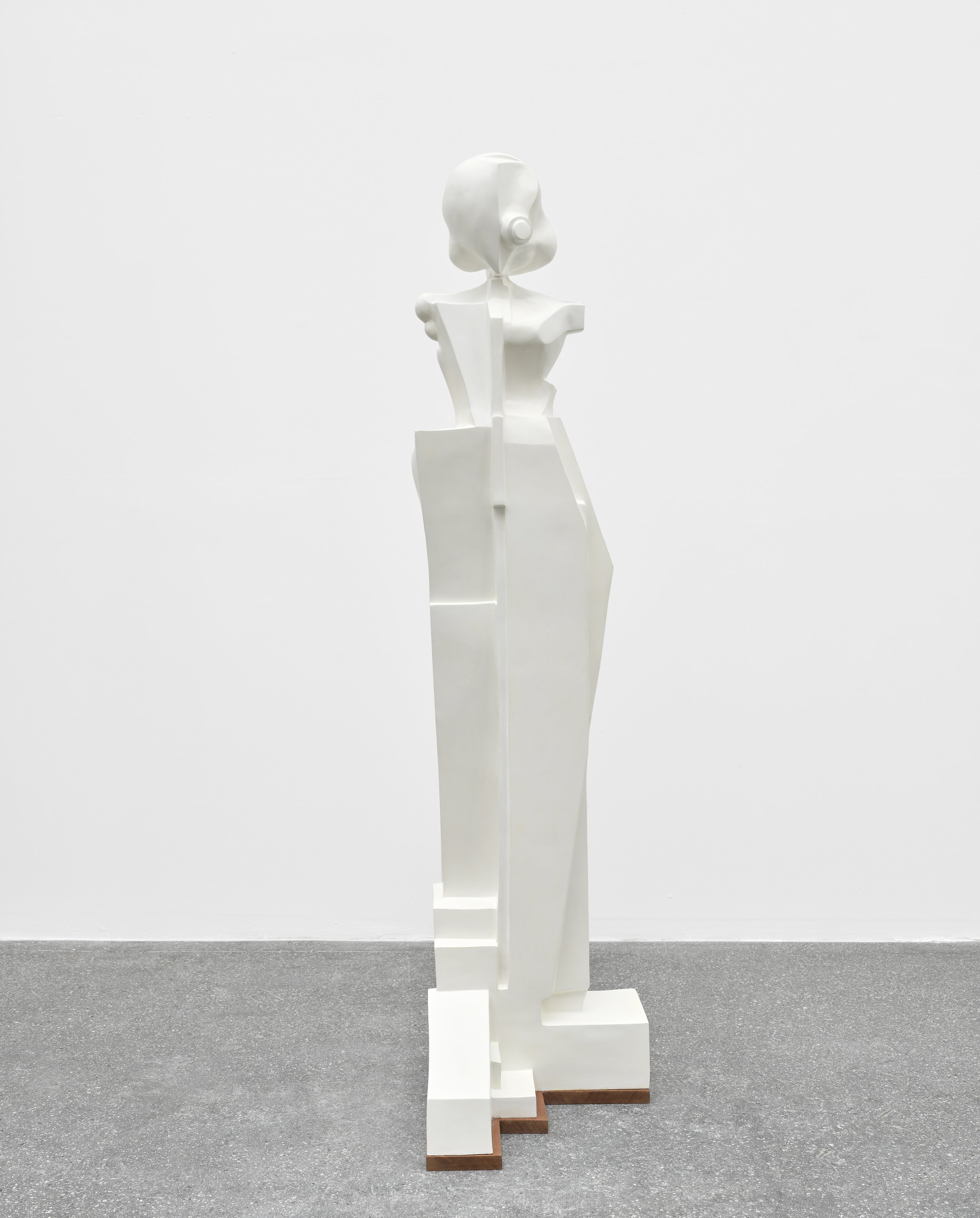
TD: Although the sculptures are abstract, looking at them reminds me of a body, which is a bit distorted or grotesque. You once told me that you were trying to convey the essence of a person and qualities of the human nature like curiosity, rather than portray a specific person. To me, the sculptures look like something in a phase of becoming. Can you talk about this? In that context, I'm also curious to hear about your relationship with the body.

CK: I’m more interested in the different human conditions rather than specific individuals. My relationship to the body is quite direct. I understand what it can and cannot do, in that sense it can operate like a grid itself. I have a decent awareness of its strengths and vulnerabilities, and those qualities allow me to load it with content and alter the form accordingly.

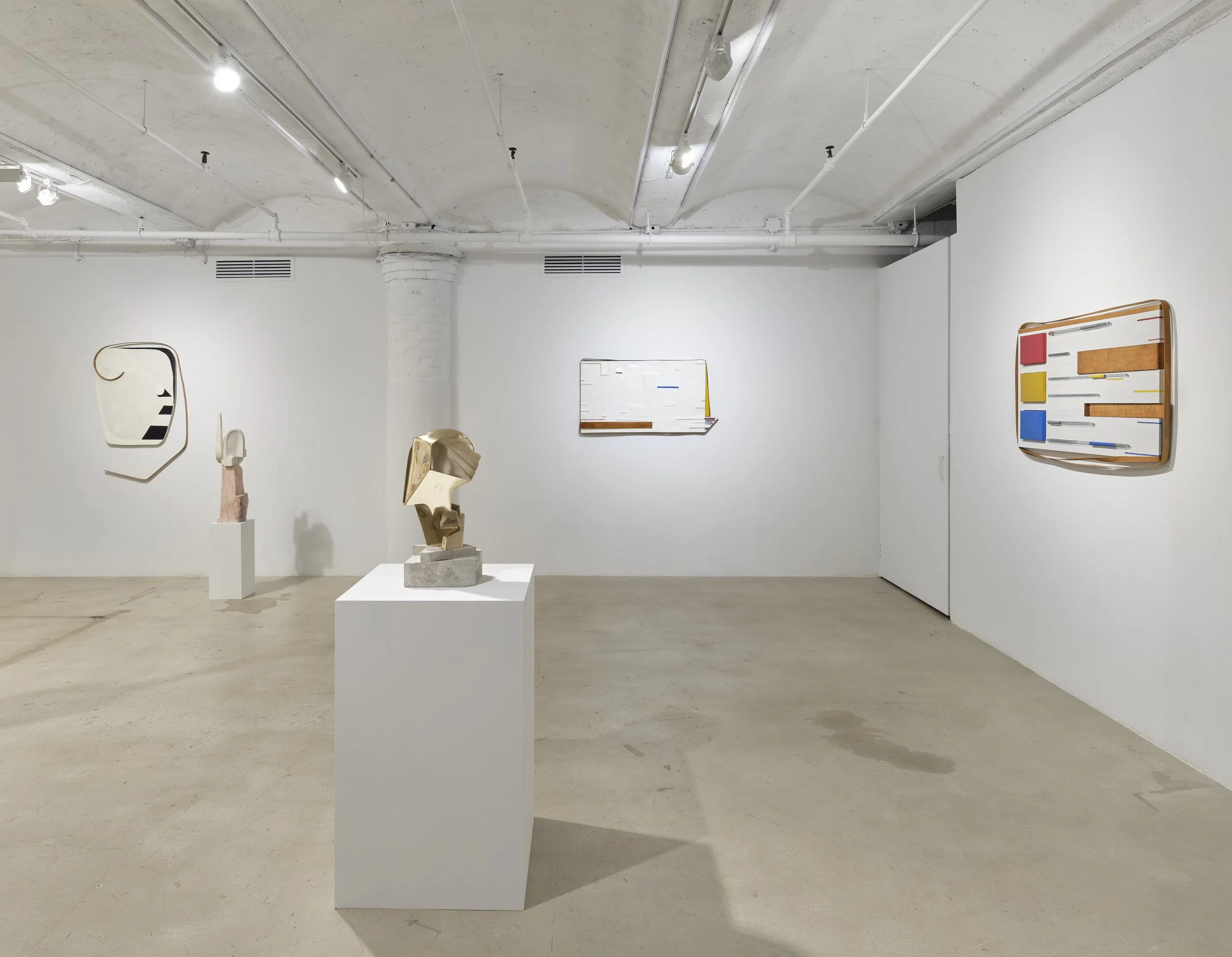
TD: I'm thinking about what you said about the body. Balance and weight shifting are very present in your practice. The springs in some of the wall works for example are about hold and release and they are also linear trajectories versus the volume of the sculptures. These concepts are similar to the terms used in Gaga, a movement language that I practice, developed by the choreographer Ohad Naharin, which allows exploration of new territories and possibilities in the body through movement. "Expansion-Contraction", "Submitting to gravity - Negating gravity", "holding- releasing", "explosive power-restraint" "Weight shift", all are common terms used in Gaga. Can you talk about those elements in your work?

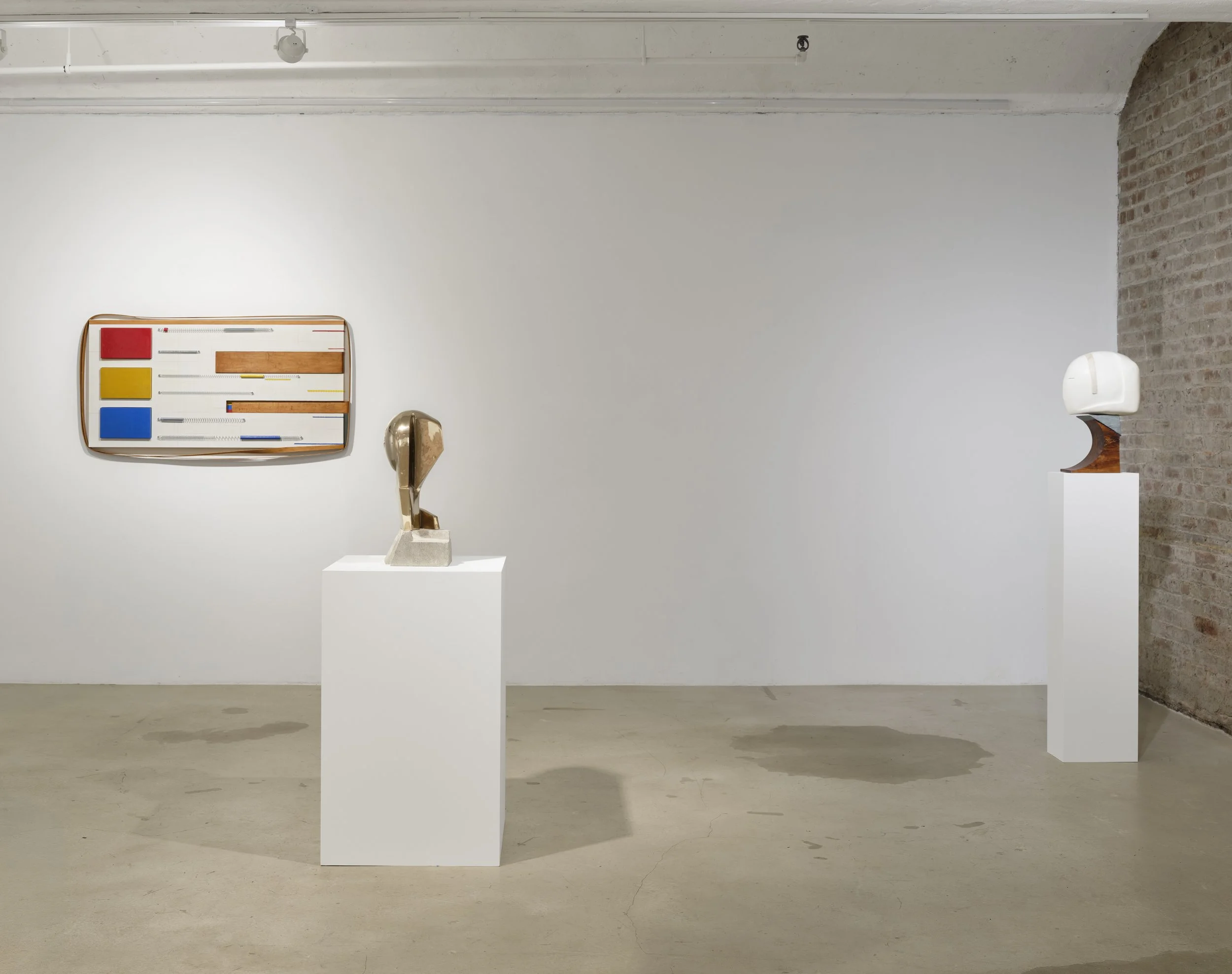
CK: All of these elements are part of the negotiations that take place throughout the process. Gaga, as you describe it, seems to involve a very personal and open form of negotiation, there are no rules and no mirrors, no judgment, which feels similar to the process in my work. I imagine it to be a very truthful dance which reminds me of that in my work meaning does not emerge from narrative but from how structure holds, shifts or sometimes fails under its own logic. And to return to the idea of negotiation, the spring introduces a new externally added element. It carries its own established properties and therefore suggests new potential negotiations within the work. In my logic, the next iteration of that situation would likely look very different if the springs were allowed to fully do what they are designed to do and embed themselves into the existing structure and values of the piece.

TD: You also made a move of expansion to the wall with relief like works that incorporate readymades like springs and blueprints. Can you elaborate on the evolution of your work?

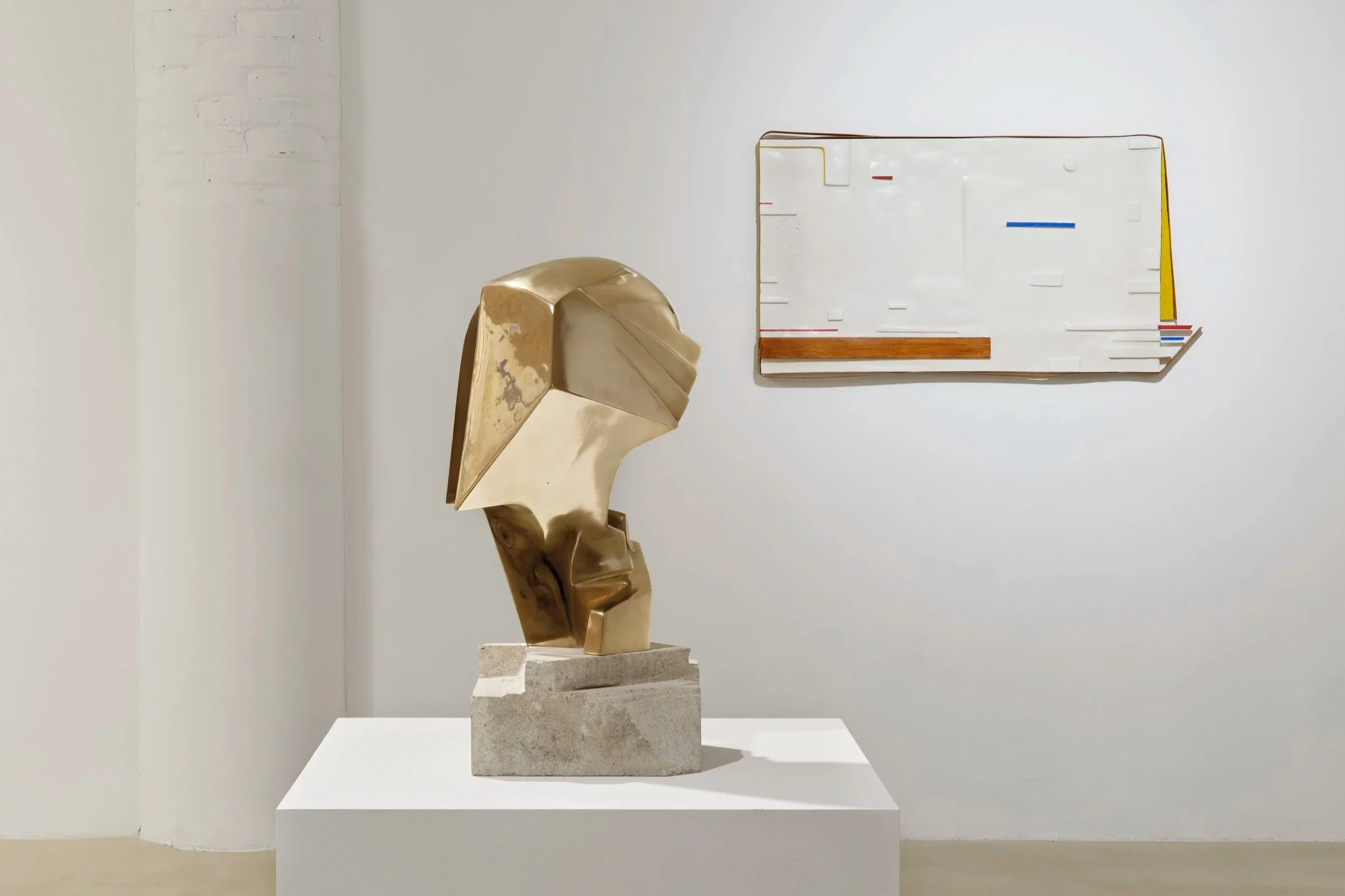
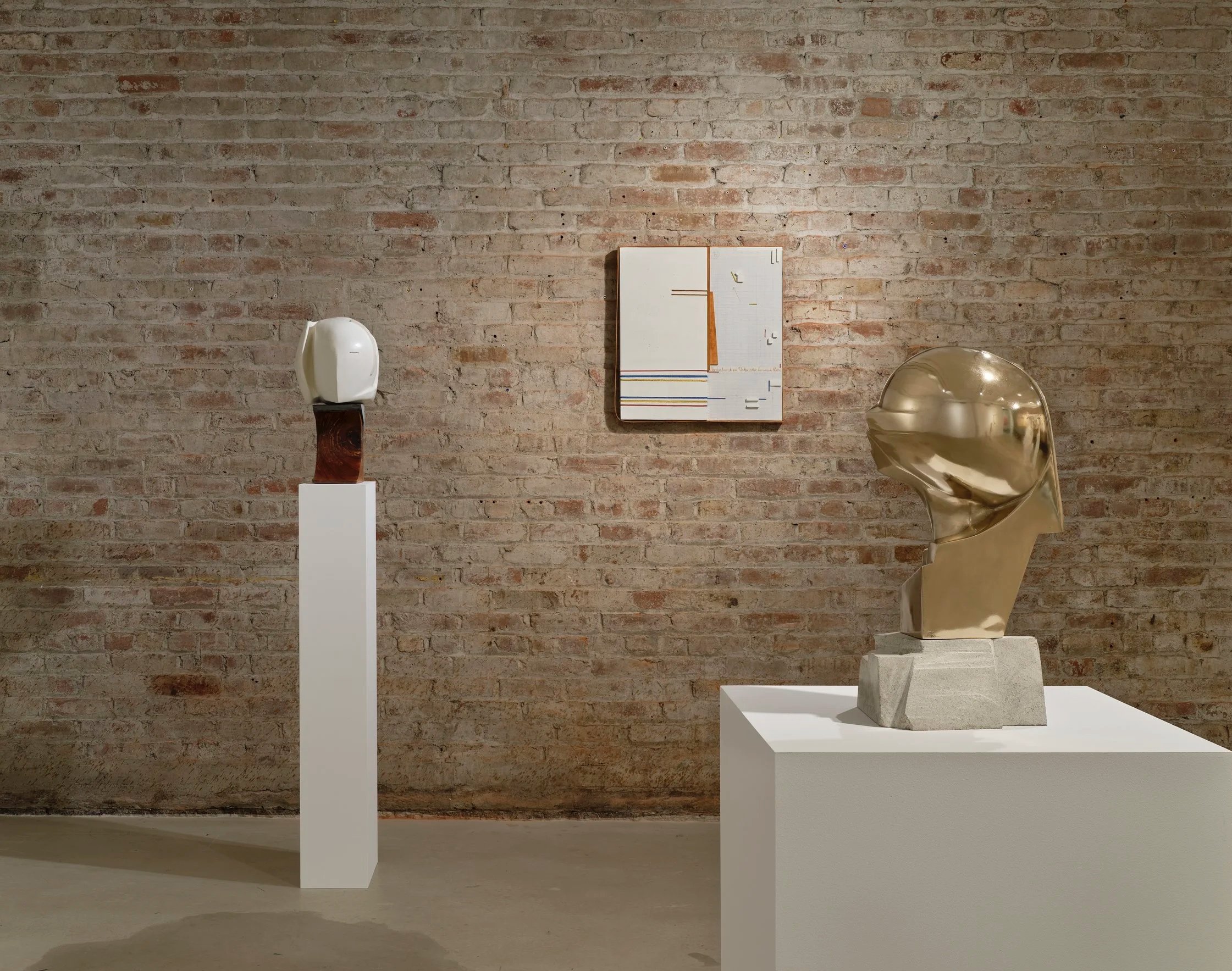
CK: The move toward wall-based works emerged through the collage process, and it was not something I anticipated. The collage are accumulations of thought in physical form - notes, drawings, objects, fragments, and together they hold the full content of this body of work. I realized I could take a small section and magnify it into a standalone wall works. They are like a diagram, a data sheet, a thought process enlarged, or a small part of a whole and I thought worth exploring. These works are like working diagrams that kind of refuse to be flat drawings.

TD: Do you feel that the bronze sculpture also stems from the collage? To a certain extent it feels like a subversive element in the installation. What is its role in the exhibition?CK: The bronze sculpture does stem from the collage, but not directly. The collage holds an open field of thoughts, while the sculpture condenses that into a more focused, self- contained form. It feels subversive because it introduces a sense of permanence. Where the collage remains flexible and negotiable, the bronze fixes that moment. Compared to the other sculptural works, which hold an openness and internal negotiation, the bronze is resolved.

TD: You talk a lot about the grid, which in Western art history has been positioned as an emblem of modernism. It is clear that the range of influences on your work is very diverse, from ancient reliefs, through Cubism, Russian Constructivism, through artists like Giacometti, Brancusi, Sophie Taeuber-Arp, just to name a few. Art often has one foot in tradition and one foot in the desire to break free from the shackles of it and to create some kind of counter- movement.

CK: A grid is a tool to scale and put things in proportion and tradition is already embedded in my grid, it is the grid, which is impossible to ignore. I have never felt a desire to have to counter react but to find that moment right before a reaction will take place. I never know what a sculpture will end up looking like, it’s somewhat of a mysterious process that happens through the heart, head and hands. I don't think art needs to break free from anything. if anything, it simply moves forward through a natural evolution.

TD: From working primarily with monochromatic colors, you began incorporating colors into your work. What caused this shift?

CK: I quite like colors actually. On sculptures, admittedly, nothing too loud so far, and for this body it wasn’t needed as there is already the natural color of the materials. For the wall works it’s a different story and I did use yellow, red and blue, the primary colors, as I feel they are a grid in themselves.

TD: Although their work is much more figurative and expressive, artists like Thomas Houseago, Thomas Schütte, and Georg Baselitz come to mind when looking at your sculptures. Do you feel there is a connection between your work and theirs? Growing up in Germany, were you familiar with Schütte’s and Baselitz’s work?

CK: Thomas Schütteś Die Fremden remains one of my favorite works as does Giacometti's Le Nez. Schütte to me is brilliant in disguising the origin of character and I often stood in front of some of his sculptures and thought of the endless possibilities of pasts he has given them. Many years ago, a friend said to me - we need to go to the Brooklyn Museum, you would love it! We walked into a Lee Bontecou exhibition, I have never heard of her before and I just loved her works. It didn’t matter whether or not I knew anything about her, her work or her process, I just immediately loved what I saw. Bontecou’s works felt like constructed presences or self-contained systems with their own internal logic. Though our works differ greatly I can relate to her approach. So, in terms of affinity, I feel that in her work much more than anyone else so far.

TD: The titles of the works in the exhibition are in German. Jacques Derrida referred to the mother tongue as a "mobile home" and a second skin that accompanies us. Since the body is present in the exhibition in one way or another, it also makes me think about what Derrida said about language in general. He said that language had a body, so if we consider this inthe context of the exhibition, giving names to the works instead of just titling them Untitled, becomes another dimension of corporality. Why did you choose German?

CK: German has a much more poetic word bandwidth than English in my experience. For example, ‘Der Gefasste’ in English means the one who is prepared/composed/ready to brace/calm/disciplined. In German it is one word for all of the above - so, yes one word in German can embody many words in English and it feels right to use that.

TD: If we examine contemporary culture and consider the apparent ease with which sublime aesthetics are assimilated in it, often reinforcing a culture of spectacle and shallowness, where do you position your work and this exhibition in relation to that?

CK: Good question and I don't know the answer to that. The sculptures are self-contained, not asking for attention, nothing is loud, colorful or spectacle like, if anything it’s the complete opposite. The works exist on their own terms and one might connect and appreciate that or not.

TD: Everything is constantly changing. Life is fleeting and in constant flux, and we have no control over it. In the process of making your art while navigating current global upheavals, are you able to find beauty in impermanence?

CK: My step dad always says that nothing stays the same. There is something comforting about that and the beauty of impermanence is the recognition of the state itself and the many options it offers. While working I don't think of it, that's already a given, I think about a permanent manifestation of those moments.

And yes, I think there is a beauty in that, especially if I can give it a form.